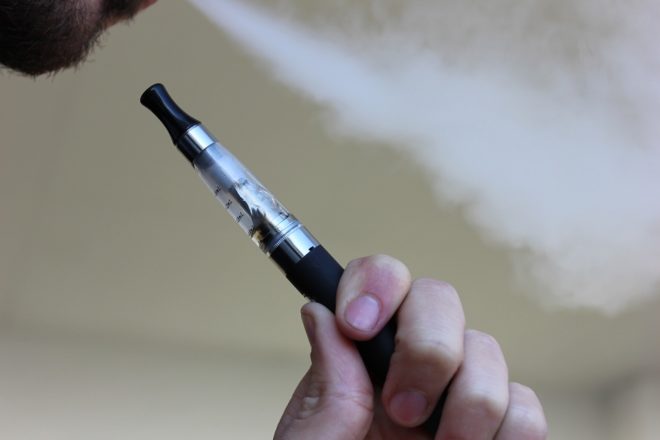
Democrats on the Appropriations and Financial Affairs Committee voted to raise the tobacco tax by $1.50 this session, surpassing Gov. Janet Mills’ proposed $1.00 increase. This boosts the tax of cigarettes and other nicotine products from $2.00 to $3.50. This change was adopted as part of Democrats’ “Part 2” budget, which was approved along party lines before the 2025 legislative session ended.
“Sin taxes” are designed to punish consumers and deter “sinful” behaviors like drinking alcohol or using tobacco products. Their purpose is to improve public health by dissuading people from purchasing them due to their high costs. While these goals may be laudable, evidence shows these policies do more harm than good. It’s also worth noting that, if the lawmakers who voted for this increase truly cared about public health, they would have proposed these changes long before Maine found itself in a budget crunch.
Fueling Smuggling and Lost Revenue
Testimony from the Mackinac Center in opposition to Gov. Mills’ proposed tobacco tax increase highlighted the impacts these hikes would have on smuggling and black markets. The center developed a model which they use to determine rates of cigarette smuggling and tax avoidance based on state-level sin tax rates.
Mackinac estimates that, in 2022, 7% of all cigarettes consumed in Maine “were a function of tax evasion or avoidance.”
Using its model, Mackinac estimated under Mills’ plan (a 50% increase in the tobacco tax to $3.00), 14% of cigarettes consumed in Maine after the tax hike would be a result of tax evasion or avoidance.
This increase will continue to encourage cross-border consumption, incentivizing Maine smokers to travel to New Hampshire or other states to purchase their preferred products. The high cost also creates incentive for people to purchase those products out-of-state and resell them in Maine.
Maine already struggles with smuggling, according to the Mackinac Center. Maine has a 6.02% smuggling rate with a revenue impact of $6.9 million. This problem will only be exacerbated by substantial increases in the tobacco tax approved by lawmakers this session.
Unsuccessful at Curbing Smoking
There is questionable evidence to suggest sin taxes are effective. According to the Mercatus Center, “research has shown that when the price of a ‘sinful’ good increases, consumers often substitute an equally bad [product] in its place.”
Proponents of high sin taxes claim they serve as a useful deterrent, but other studies undermine their ultimate effectiveness. The Cato Institute’s model implies that a 100% increase in the cigarette tax would decrease smoking among adults between only 1-2%.
Regressive Burdens on Low-income Families
Extensive research shows that tobacco taxes disproportionately burden low-income people without meaningfully reducing smoking rates. A 2012 study found that low-income smokers (households earning less than $30,000 annually) in New York spent 23.6% of their income in 2010-2011– up from the 11.6% of their income in 2004.
The financial strain from tobacco taxes can also be found in Maine where smoking rates are high among low-income communities. Almost 30% of Maine adults who make $25,000 or less are smokers compared to just 7.4% of those who make $50,000. There’s no question the hike approved by lawmakers disproportionately hurts those who already struggle to make ends meet in Maine.
Sin Taxes Aren’t The Answer
Research suggests that smoking rates are down not because of lawmakers who impose irrationally high taxes, but because people have chosen to be more health conscious and switch to less harmful products.
Sin taxes are regressive, hurt low-income Mainers, and do not curb smoking rates at the levels proponents claim.
Unfortunately lawmakers chose to increase sin taxes – not to make Maine healthier, but to cover their manufactured budget crisis after years of irresponsible spending. Reducing or eliminating harmful sin taxes while curbing unnecessary state spending is the real solution the legislative majority is disinterested in pursuing.