

This opinion editorial by a local business owner was published in the Portland Press Herald this week.
The tax in question — formerly part of LD 1089 which was ultimately scrapped, technically, but still stitched into the supplemental budget in a different form — adds a 2% surcharge tax on annual income over $1 million for single filers and $1.5 million for married couples and other filers. It was proposed in an attempt to achieve “tax fairness” in Maine, according to its sponsor, Rep. Cheryl Golek (D-Harpswell).
This tax has become known as the “millionaire tax” — a misnomer that ought to be replaced with more precise terminology such as, simply, a “surcharge tax.”
Serious question: Given the fact that the Maine Legislature has demonstrated precisely zero fiscal restraint, has dramatically increased the state’s budget by 45% since 2019, and has provided a profoundly underwhelming return on the spending, why should we trust the money will be spent wisely, meaningfully, and honestly? Why should more hardworking Mainers — even those in an anomalous cohort — surrender more of their hard-earned money to the Maine government after we’ve witnessed its egregious spending habits and abysmal fiscal management for the last eight years?
The author says in the op-ed that the additional revenue from the tax, estimated to be about $75 million, could “help support services that directly influence whether Maine businesses can hire and retain employees: childcare assistance, tuition-free community college, better pay for care workers, help for families facing eviction and support for schools.”
Well, sure — it could, in theory. But will it? The tax was originally supposed to be earmarked specifically for funding public education, but since being added to the supplemental budget, the revenue is now being directed to the General Fund, where it can support the broader state budget.
The notion that the revenue could theoretically be used to support all the things the author mentioned sounds nice and even reasonable; after all, Maine Policy sincerely wants families, childcare workers, schools, and aspiring students here in Maine to prosper. Indeed, prosperity and freedom for all Mainers is the cornerstone of our mission.
But the reality is, as with most or all “progressive” ideas, taking more money from Maine taxpayers and throwing it at various issues to ostensibly benefit Mainers is, at this point, rooted in unrealistic and utopian fantasies, given our state government’s track record with spending and fiscal mismanagement in the last eight years.
We haven’t had a revenue problem; we’ve had a spending problem. And still, attendant with that spending problem has been a litany of issues that still haven’t been resolved — and in some cases, have exacerbated.
It’s a reasonable question to ask: we’re crushed by taxes, but where, exactly, is our money going?
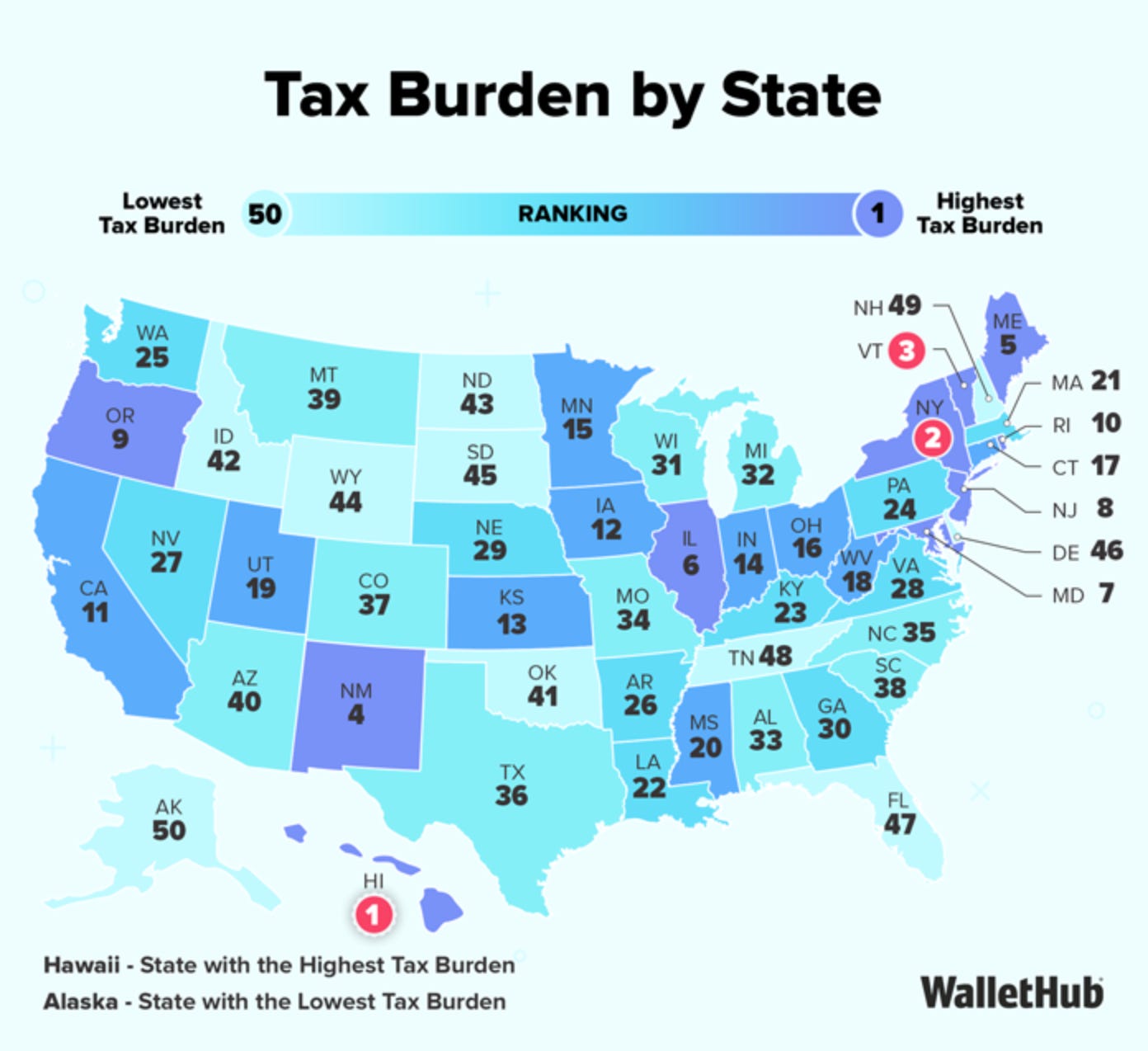
For example, Maine ranks as having one of the greatest tax burdens in the nation, but among the results are:
‣ Astronomical energy and housing costs
‣ Deplorable education outcomes (#41 in the nation)
‣ Ubiquitous and unchecked fraud that exploits Maine taxpayers
‣ Unfettered organized crime
‣ “Harm reduction” policies that have resulted in the distribution of 17.2 million free needles — 2.3 million of which remain uncollected — and the largest HIV/AIDS and hepatitis C outbreak in generations.
‣ An environment hostile to businesses
‣ The worst infrastructure in the country
‣ Nearly $47 million misspent on improper Medicaid payments
Additionally, supporters like the author here frame this tax hike as targeting the “rich,” arguing it will only affect a small number of ultra-wealthy Mainers. This is a misconception. This tax will affect everyday business owners and have a ripple effect on Mainers across all tax brackets.
As we mentioned in our own op-ed in March, most small businesses in Maine pay taxes through the individual income tax, meaning these higher personal income rates would affect profits for small, family-owned businesses. Think of a lobster wholesaler in Rockland or a family dairy farm in Aroostook County. Their owners report every dollar of business profit on their personal returns. When taxes increase on those businesses’ income, the consequences do not stop with the individual business owner. Higher taxes influence decisions about hiring new employees, investing in equipment, and even wages and raises.
This tax will affect everyday business owners and have a ripple effect on Mainers across all tax brackets.
Ultimately, this surcharge tax will have a net negative effect on Maine’s economy with the following:
‣ Adverse and disproportionate impacts on employers and small businesses
‣ Slower economic growth and reduced investment
‣ Risk of talent loss and reduced attraction of high-value workers
‣ Widening competitive disadvantage relative to New Hampshire
‣ Increased revenue volatility and budget risk
The theory that if more people just surrender more of their money to the government, life will miraculously improve across the board for all Mainers, is at the very least deeply misguided, if not utterly delusional. As it turns out, utopia isn’t achieved when unscrupulous bureaucrats get their way and force you to surrender more of your money; after all, no amount of money and no amount of taxes is ever enough to satiate the progressive lawmakers’ unquenchable thirst for more government spending, regardless of results. This is why one of the greatest errors people often make is placing an inordinate amount of trust in the government.
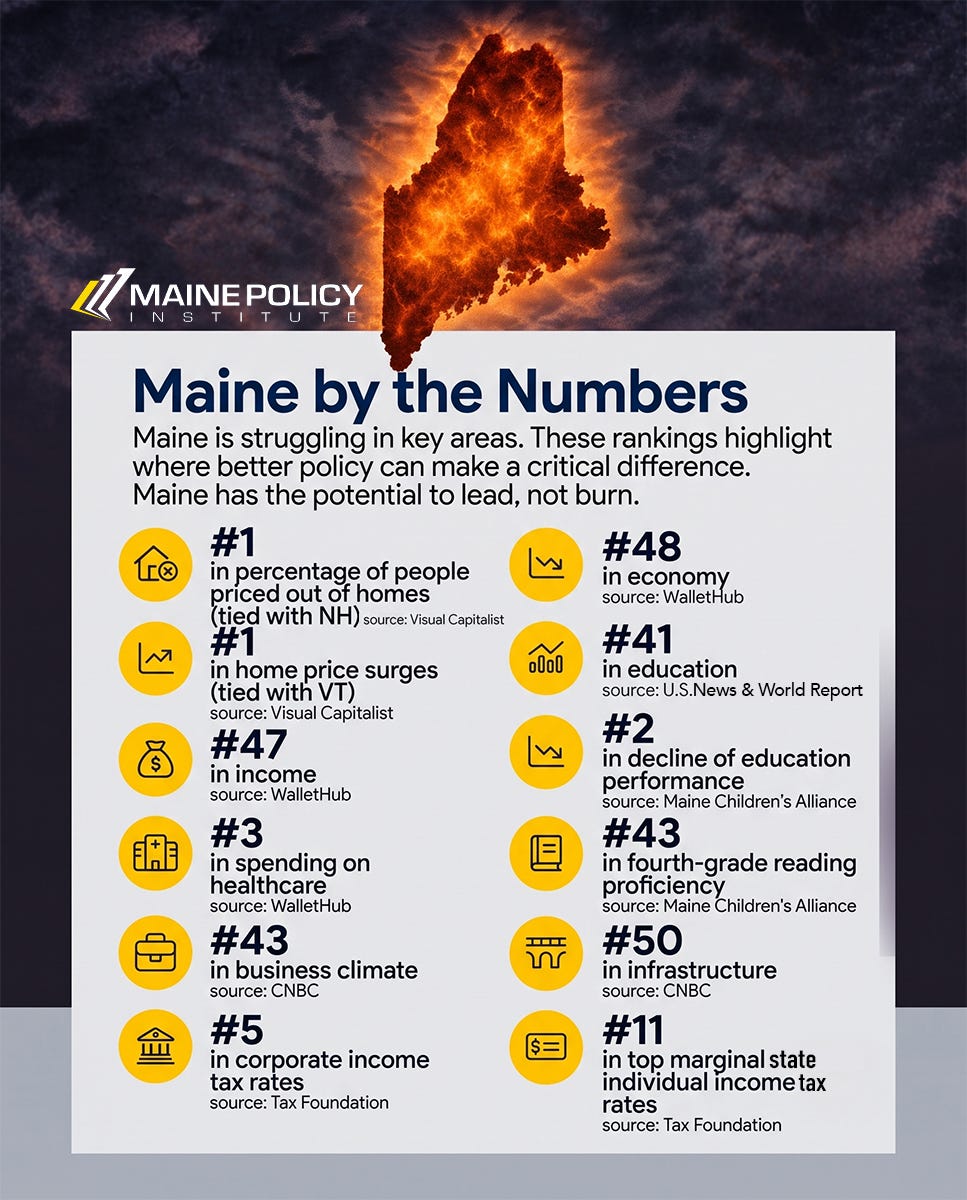
To be clear, Maine Policy has not only been opposed to this surcharge tax, but to taxes affecting all Mainers in general. In 2025, Governor Janet Mills and the Maine Legislature passed a slate of new taxes that affect ordinary, working Mainers, taking more of their money to be used for — what, exactly? To help Mainers, or to fill some budgetary shortfall created by lawmakers in Augusta? In any case, we opposed those taxes, too — not to mention the limitless spending. To compound the offense, Governor Mills had made hollow campaign promises not to raise taxes, and sure enough…
Now that the budget has exponentially inflated and new taxes have gone into effect since Governor Mills took office, Maine residents need to ask themselves whether life has improved or worsened. It seems the latter is true, as 75% of Mainers perceive Maine as unaffordable, and 30% may leave in the next five years, according to a recent UNH poll. About two-thirds cite housing and the cost of living as the driving factor for their decision to leave the state, and 50 percent of those who plan to leave the state mentioned lower taxes as a reason.
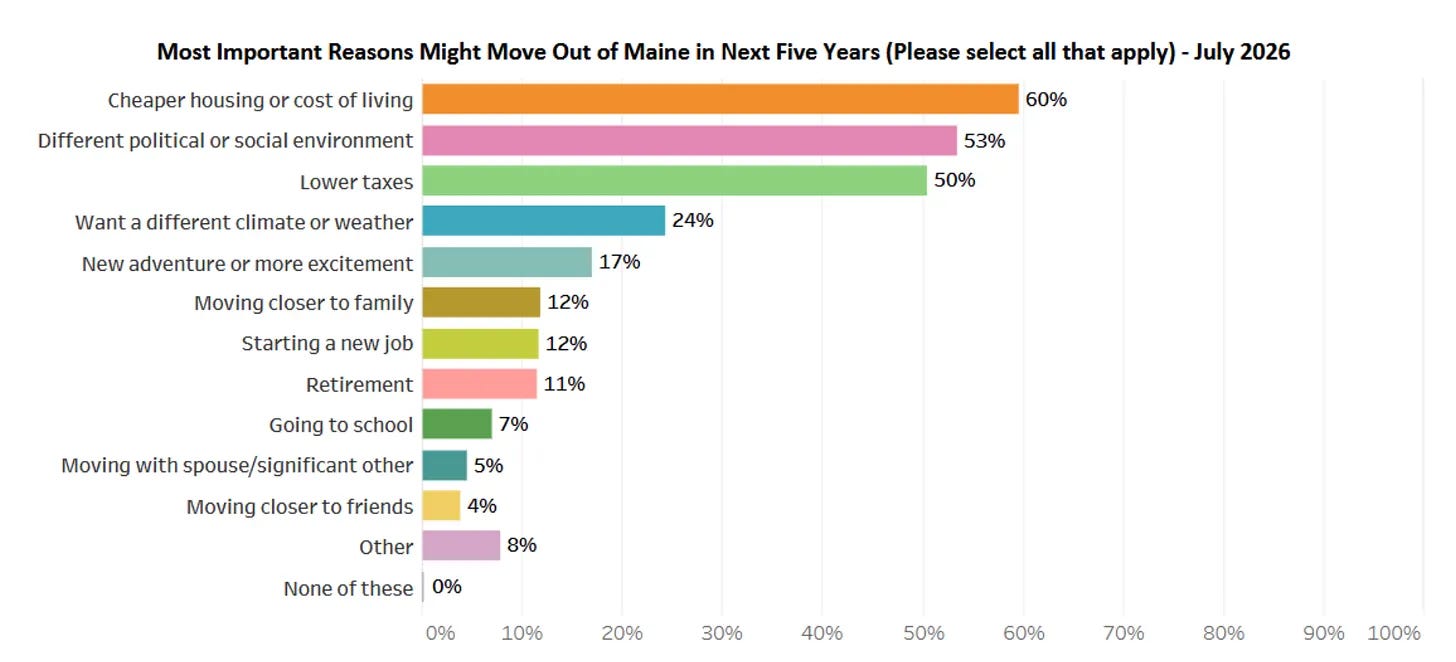
…But a massively increased budget and a host of new taxes should mean greater prosperity and quality of life for Maine people, right?
Let’s face it: Mainers are being taxed to death, and the results have been abysmal. As Steve Robinson put it, “[T]he obvious thing that ten years of progressive experimentation has now proven beyond serious dispute: the progressive program has made life in Maine worse. Not marginally worse. Worse in every single way that social science, economics, and political science can measure. Everything is worse and nothing is better after voters handed progressives carte blanche over the levers of political power.”
Current leadership in the Maine Legislature erroneously holds that we can tax our way into prosperity. We can’t. So until the Legislature can actually demonstrate some modicum of frugality and lower taxes for all Mainers, Maine Policy will object to any new tax proposed, no matter whom it targets.
While this 2% surcharge tax is deeply flawed in its own right, consider this message a wholesale indictment of any increase in taxes in Maine — especially after we’ve seen the results.